
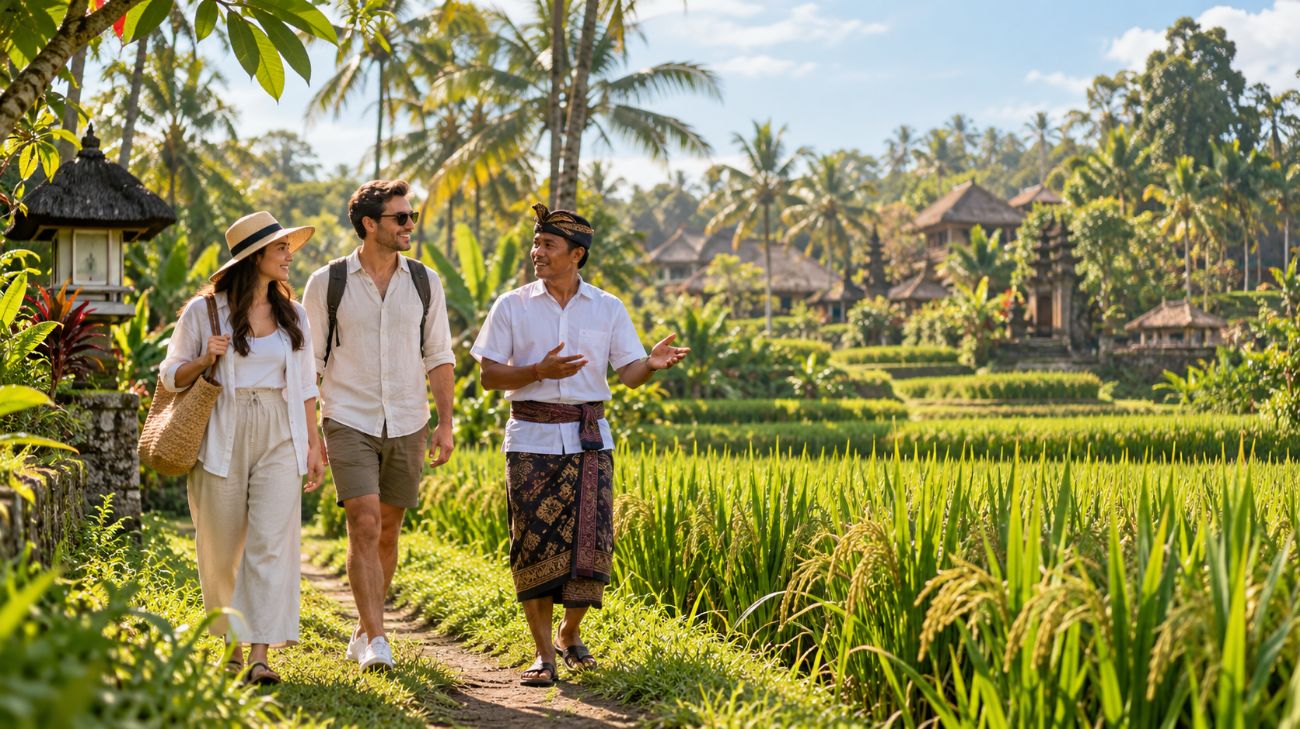
Looking for authentic things to do in Ubud beyond the usual tourist attractions? Bali’s cultural heart offers more than temples, rice terraces, and art markets. Some of its most meaningful experiences come from exploring local traditions, meeting skilled artisans, and discovering everyday village life.
You might walk through a working rice field, learn to prepare a Balinese dish, or discover how local artisans transform natural materials into everyday objects. These activities offer a closer look at the traditions that shape life in Ubud.
If you are searching for authentic things to do in Ubud, this guide will help you explore the destination beyond conventional sightseeing. It also explains how to choose meaningful experiences while respecting local communities.
Quick Answer
What are the most authentic things to do in Ubud?
Some of the most authentic things to do in Ubud include exploring working rice fields, learning about the Subak irrigation tradition, joining a Balinese cooking class, discovering local crafts, and observing cultural performances.
You can also visit traditional markets, learn about Balinese offerings, and spend time in the villages surrounding Ubud.
For a more meaningful visit, choose experiences that involve local guides, respect community traditions, and allow time for genuine cultural discovery.
Key Takeaways
- Authentic Ubud experiences often reveal everyday traditions rather than focusing only on famous attractions.
- Guided rice-field walks can introduce visitors to farming practices and the cultural importance of water.
- Balinese cooking classes connect local ingredients with family recipes and culinary traditions.
- Traditional crafts offer insight into the skills and natural materials that local communities use.
- Cultural performances provide an introduction to Bali’s artistic heritage.
- Respectful participation matters, especially when visiting temples or learning about religious practices.
- Staying near Ubud’s countryside can make it easier to combine cultural exploration with peaceful relaxation.
1. Authentic Things to Do in Ubud: Explore Working Rice Fields
Rice fields are among Ubud’s most recognisable landscapes. However, they represent much more than beautiful scenery.
For generations, rice cultivation has shaped local communities, farming traditions, and the surrounding environment.
A walk through working rice fields offers an opportunity to understand this relationship.
Rather than focusing only on photographs, take time to observe the irrigation channels, planting patterns, and daily activities that support rice cultivation.
Learn About the Subak Tradition
Subak is a traditional Balinese system of irrigation management. It also reflects cooperation among farmers and connections between agriculture, community organisation, and religious practices.
Although visitors often associate Subak with picturesque terraces, its significance goes far beyond the landscape.
A knowledgeable local guide can explain how farmers share water and maintain their agricultural environment.
As a result, a rice-field walk becomes an educational experience rather than simply a scenic outing.
At Wapa di Ume Ubud, guests can explore the surrounding countryside through Rice Paddy Trekking, an activity that introduces local farming and irrigation traditions.
For a deeper introduction, read our guide to Ubud’s rice fields and Subak culture.
2. Join a Traditional Balinese Cooking Class
Food provides one of the most enjoyable ways to discover local culture.
Balinese cuisine combines aromatic spices, fresh ingredients, and cooking techniques that families have shared across generations.
A cooking class allows visitors to explore these traditions through direct participation.
Instead of simply ordering a dish at a restaurant, you can learn how local ingredients work together.
Discover Local Markets and Ingredients
Many Balinese cooking experiences begin with an introduction to traditional markets.
These lively spaces offer an opportunity to discover herbs, vegetables, spices, and other ingredients used in local kitchens.
For example, you may encounter turmeric, galangal, lemongrass, ginger, and aromatic leaves.
Learning about these ingredients helps explain the distinctive flavours of Balinese cuisine.
Furthermore, a market visit introduces the everyday routines of vendors and local shoppers.
Remember that markets are working community spaces. Therefore, ask permission before photographing people or interrupting their activities.
Learn to Cook Balinese Dishes
After exploring the ingredients, a hands-on cooking session brings the experience together.
A local instructor can demonstrate preparation techniques, explain traditional spice mixtures, and guide participants through selected recipes.
At Wapa di Ume Ubud, the Balinese Private Cooking Lesson introduces guests to Balinese cuisine in a traditional kitchen setting.
The resort’s cooking experience also connects culinary learning with local ingredients and the surrounding natural environment.
For more details about the culinary journey, explore our article on the Balinese Private Cooking Class in Ubud.
3. Discover Traditional Balinese Offerings
Visitors to Bali often notice small arrangements of flowers and natural materials outside homes, shops, and temples.
These offerings form an important part of Balinese Hindu religious life.
One of the most familiar examples is Canang Sari.
Understand the Meaning of Canang Sari
Canang Sari is a traditional offering that Balinese Hindus prepare as an expression of devotion and gratitude.
Its arrangement often includes flowers and a small base made from woven palm leaves.
Although visitors may admire the craftsmanship, the offering has a deeper religious purpose.
Consequently, cultural experiences involving Canang Sari should introduce both its preparation and its significance.
Some workshops allow participants to learn basic arrangement techniques under local guidance.
However, visitors should approach these activities with respect. Religious offerings are not merely decorative souvenirs.
When observing ceremonies or temple activities, follow local guidance and avoid disturbing worshippers.
4. Discover Authentic Balinese Crafts in Ubud
Ubud has a long association with art and craftsmanship.
Beyond its galleries and souvenir shops, local creative traditions include woodcarving, painting, weaving, and the use of natural materials.
Participating in a craft workshop can reveal the patience and practical knowledge behind these skills.
Explore Coconut-Leaf Weaving
Coconut leaves have many traditional uses in Bali.
Artisans weave them into ceremonial decorations, practical objects, and other handcrafted items.
The process requires careful folding, shaping, and an understanding of the material.
For visitors, learning even a basic technique can create a deeper appreciation of this everyday craftsmanship.
Wapa di Ume Ubud introduces guests to this tradition through its Balinese Coconut Leaves Creation activity.
The experience offers an opportunity to discover the techniques and cultural context behind palm-leaf creations.
Appreciate the People Behind the Craft
When choosing a workshop, look for opportunities to learn directly from local makers.
Ask about the materials, techniques, and traditions involved.
In addition, consider purchasing handmade work directly from artisans when possible.
This approach can support local craftsmanship while helping visitors understand the time and skill behind each creation.
5. Experience Balinese Music and Dance
Traditional performing arts remain an important part of Bali’s cultural identity.
Music, dance, and storytelling appear in ceremonies, community events, and performances for visitors.
Ubud offers opportunities to discover these traditions through established cultural venues and local performances.
Discover the Sounds of Traditional Instruments
Balinese music includes a wide range of instruments and ensembles.
For example, gamelan music often features layered rhythms and coordinated performances.
Another traditional instrument is Rindik, which uses tuned bamboo elements to create a distinctive sound.
Listening closely can reveal the connection between music, movement, and cultural expression.
Watch a Performance Respectfully
A traditional dance performance can introduce visitors to stories, costumes, gestures, and musical traditions.
However, not every performance has the same cultural purpose.
Some take place as public entertainment, while others form part of religious ceremonies.
Therefore, choose appropriate venues and respect restrictions on photography or access.
Arriving early also allows time to understand the setting and any guidance from organisers.
6. Visit Traditional Markets Beyond Souvenir Shopping
Markets offer another perspective on daily life in Ubud.
While many visitors focus on shopping, traditional markets also serve local households and food businesses.
Early trading hours can reveal a different atmosphere from the tourist-oriented shopping experience later in the day.
You may see vendors arranging produce, preparing ingredients, or serving regular customers.
How to Explore a Local Market Respectfully
Take time to observe how the market operates before approaching stalls.
If you want to photograph a vendor, ask first.
Likewise, avoid blocking narrow pathways or interrupting transactions.
Learning a few simple Indonesian greetings can also make interactions more welcoming.
Most importantly, remember that local markets exist primarily to serve the community.
Approaching them with curiosity and courtesy creates a more meaningful experience.
7. Spend Time in the Villages Around Ubud
Ubud’s surrounding villages offer a different pace from its busy centre.
Here, visitors may encounter agricultural landscapes, family compounds, small temples, and local workshops.
However, these are living communities rather than attractions created for tourism.
A thoughtful visit should respect residents’ privacy and daily routines.
Choose Guided Village Experiences
A local guide can help visitors understand community customs and recognise places where access may be restricted.
Guides can also explain the relationship between village life, agriculture, and cultural traditions.
Moreover, they may introduce appropriate opportunities to meet local makers or learn about traditional practices.
Avoid entering private compounds, fields, or religious spaces without permission.
By respecting these boundaries, visitors can explore Ubud’s cultural landscape more responsibly.
8. Slow Down and Experience Ubud’s Natural Rhythm
Not every authentic experience requires a formal tour.
Sometimes, the most memorable moments come from enjoying a quiet morning, listening to nature, or observing the changing light over rice fields.
Ubud’s countryside offers a peaceful contrast to its busier streets.
For example, an early walk can reveal farming activity and the sounds of village life.
Meanwhile, a relaxed afternoon provides time to appreciate the surrounding landscape.
Balance Cultural Discovery with Relaxation
A well-planned Ubud itinerary does not need to include several attractions every day.
Instead, consider combining one meaningful cultural activity with time to rest.
You might join a morning rice-field walk, enjoy a local cooking experience, and spend the afternoon relaxing.
This approach reduces unnecessary travel and leaves more time for genuine discovery.
It also allows visitors to appreciate Ubud without turning every moment into a scheduled activity.
How to Choose Authentic Things to Do in Ubud
Not every activity described as authentic offers the same level of cultural engagement.
Before booking, consider how the experience involves local knowledge and supports the surrounding community.
Look for Local Knowledge
Choose activities where knowledgeable local hosts explain the meaning behind what participants see or do.
For example, a guided rice-field walk should offer more than scenic photo stops.
Similarly, a craft workshop becomes more valuable when an artisan explains the materials and techniques.
Respect Religious and Community Traditions
Bali’s cultural practices often connect with religious life.
Therefore, visitors should distinguish between activities designed for participation and ceremonies intended for worship.
Follow dress requirements, listen to local guidance, and avoid treating sacred objects as ordinary decorations.
Choose Quality Over Quantity
A smaller number of meaningful activities often creates a more satisfying itinerary.
Instead of visiting several attractions in a single afternoon, allow time for questions, conversation, and observation.
As a result, you may leave with a stronger understanding of the destination.
Where to Stay for Authentic Ubud Experiences
Your accommodation location can influence how you experience Ubud.
Staying in the busiest central streets provides convenient access to shops, restaurants, and cultural venues.
However, travellers who value peaceful surroundings may prefer areas closer to rice fields and village landscapes.
A quieter base can provide opportunities to enjoy nature while remaining within reach of central Ubud.
A Rice-Field Retreat Near Ubud Centre
Wapa di Ume Ubud offers a boutique resort setting surrounded by rice fields, approximately five minutes from Ubud Centre by vehicle under suitable traffic conditions.
The resort combines a peaceful natural environment with access to the destination’s cultural attractions.
Guests can also discover selected local traditions through resort experiences, including rice-field trekking, Balinese cooking, and coconut-leaf craftsmanship.
This combination makes it possible to balance cultural exploration with time for relaxation.
To compare different locations, explore our guide on where to stay in Ubud.
You can also discover the resort’s rooms, suites, and private pool villas when planning your visit.
Travellers who want to explore more of Bali’s countryside can also extend their journey to East Bali. The Wapa di Ume Combination Package connects a stay in Ubud with Wapa di Ume Sidemen, where rice-field landscapes, hillside views, and traditional village surroundings offer another perspective on the island’s natural and cultural heritage.
Frequently Asked Questions About Authentic Things to Do in Ubud
What are the most authentic things to do in Ubud?
Authentic experiences in Ubud include guided rice-field walks, traditional cooking classes, local craft workshops, cultural performances, and respectful visits to traditional markets.
The most meaningful activities often provide opportunities to learn from local people.
Can visitors learn about Balinese culture without visiting temples?
Yes. Cooking classes, rice-field walks, craft workshops, and traditional performances can introduce visitors to many aspects of Balinese culture.
However, some activities may still involve religious traditions or explanations.
Are rice-field walks suitable for first-time visitors to Ubud?
Many first-time visitors enjoy guided rice-field walks because they combine scenery with an introduction to farming traditions.
However, route difficulty varies. Check the terrain, weather, and walking requirements before joining.
What traditional crafts can visitors learn in Ubud?
Depending on the workshop, visitors may learn palm-leaf weaving, woodcarving, painting, or other traditional techniques.
Availability varies by provider and schedule.
How can tourists experience Balinese culture respectfully?
Choose knowledgeable local guides, follow dress requirements, ask permission before taking photographs, and respect religious ceremonies.
Also, avoid entering private properties or agricultural areas without permission.
Is it better to stay in central Ubud or near the rice fields?
Central Ubud suits travellers who prioritise nearby restaurants, shops, and cultural venues.
Meanwhile, accommodation near rice fields may appeal to visitors seeking a quieter setting.
The best choice depends on your itinerary and preferred travel style.
How many days should visitors spend exploring authentic Ubud experiences?
Two or three days can provide time for several cultural activities without rushing.
However, a longer stay allows more flexibility for workshops, countryside exploration, and relaxation.
Discover a More Meaningful Side of Ubud
Ubud offers much more than its most photographed attractions.
Its cultural identity also lives in working rice fields, traditional kitchens, community markets, local craftsmanship, and everyday hospitality.
By choosing thoughtful experiences, visitors can discover the people and traditions behind the destination’s beauty.
Whether you enjoy cooking, walking through the countryside, learning a craft, or listening to traditional music, these activities can add depth to your journey.
At Wapa di Ume Ubud, guests can combine cultural discovery with the peaceful atmosphere of a rice-field boutique resort.
Explore the experiences at Wapa di Ume Ubud and discover our accommodation options to plan a more meaningful stay in Bali.