
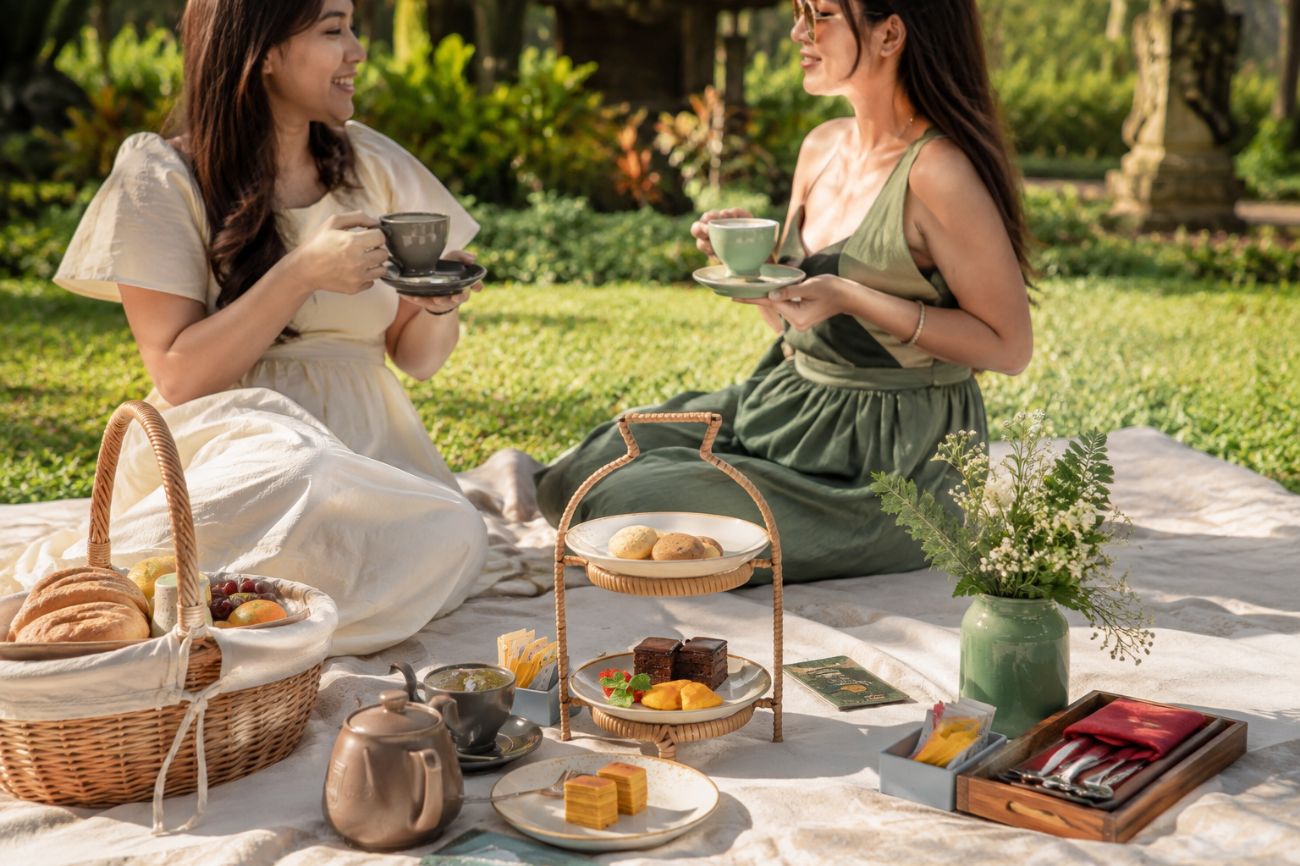
Discovering Bali involves more than visiting temples, exploring rice terraces, or admiring tropical landscapes. Some of the island’s most meaningful experiences come from slowing down and connecting with local traditions.
At Wapa di Ume Ubud, guests can discover this quieter side of Bali through Lesehan Afternoon Tea. This special experience combines traditional refreshments, Balinese music, and hands-on cultural activities in a peaceful rice-field setting.
The resort offers this cultural afternoon tea every Tuesday, weather permitting. Exclusively for resident guests, the programme celebrates local hospitality, craftsmanship, and the simple pleasure of spending time together.
Quick Answer
What is Lesehan Afternoon Tea at Wapa di Ume Ubud?
Lesehan Afternoon Tea is a Balinese cultural experience exclusively for guests staying at Wapa di Ume Ubud. The resort offers it every Tuesday, weather permitting, at Alun-Alun Wapa.
Guests enjoy traditional floor-level seating, Balinese coffee or tea, local cakes, and Rindik music. They can also participate in Canang Sari making and traditional coconut-leaf hat crafting.
Together, these activities introduce Balinese traditions in a relaxed setting surrounded by Ubud’s rice fields.
Key Takeaways
- Lesehan Afternoon Tea introduces guests to a traditional Balinese style of sitting, gathering, and sharing refreshments.
- Wapa di Ume Ubud offers the experience every Tuesday, weather permitting.
- Guests can enjoy Balinese coffee or tea, traditional cakes, and homemade cookies.
- Traditional Rindik music creates a welcoming cultural atmosphere.
- Hands-on activities include Canang Sari making and crafting a Capil Hat, also known as Topi Klangsah.
- Alun-Alun Wapa provides a peaceful setting surrounded by Ubud’s rice-field landscape.
- Only guests staying at Wapa di Ume Ubud can participate.
What Is Lesehan in Balinese Culture?
The word lesehan describes a traditional style of sitting and gathering close to the floor. People usually sit on woven mats or cushions instead of conventional chairs.
This informal arrangement appears in various Indonesian social and dining traditions, including those in Bali. It creates a comfortable atmosphere where people can share food, enjoy conversations, and spend time together.
At Wapa di Ume Ubud, guests experience this relaxed gathering style on tikeh, traditional woven mats, or low cushions.
Rather than sitting around conventional dining tables, participants gather closer to the ground. Meanwhile, the surrounding landscape adds to the peaceful atmosphere.
A Different Way to Experience Balinese Hospitality
Lesehan encourages guests to slow down and appreciate simple moments.
For example, they can enjoy traditional refreshments while sharing stories or admiring the nearby rice fields. The informal seating also creates a welcoming atmosphere for conversation.
As a result, the experience feels different from a conventional afternoon tea service.
Guests do not need to rush through refreshments or move quickly between activities. Instead, they can settle into their surroundings and discover local traditions at a comfortable pace.
This simple approach reflects the warmth and social connection that often shape Balinese hospitality.
An Afternoon of Balinese Flavours and Rindik Music
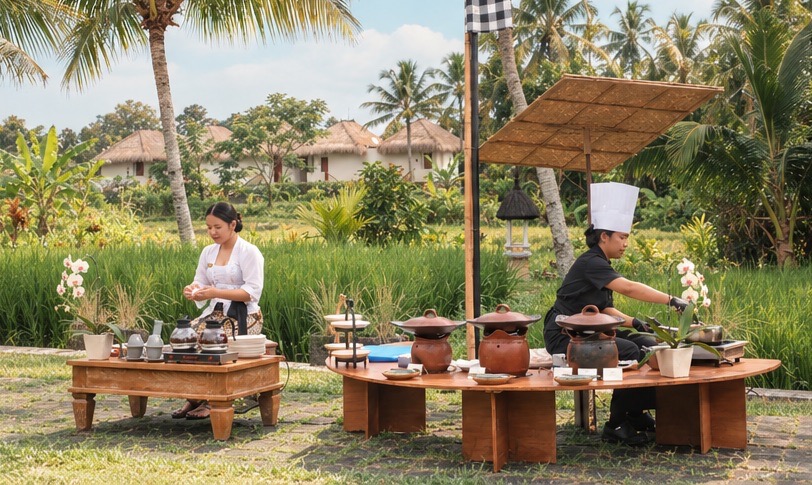
A warm welcome plays an important role in Balinese hospitality.
At Wapa di Ume Ubud, the gentle sounds of Rindik welcome guests and create a peaceful atmosphere. This traditional Balinese bamboo musical instrument produces distinctive tones that complement the natural surroundings.
As the afternoon begins, guests can enjoy Balinese coffee or tea alongside traditional cakes and homemade cookies.
These refreshments introduce familiar elements of local hospitality. Moreover, they encourage guests to appreciate the flavours of Bali without rushing through the experience.
Discovering Traditional Balinese Refreshments
Food and drink often bring people together.
Across Bali, families and communities share refreshments during social gatherings and everyday occasions. These simple moments help strengthen relationships and create a sense of togetherness.
During Lesehan Afternoon Tea, guests can enjoy a selection of local treats while relaxing on traditional mats.
The experience focuses on more than food presentation. Instead, it celebrates conversation, hospitality, and the pleasure of spending time together.
Meanwhile, the rice fields surrounding Alun-Alun Wapa provide a peaceful backdrop.
Together, the refreshments, music, and natural setting create a memorable introduction to Balinese cultural traditions.
Learning to Make Canang Sari
One of the most meaningful activities during Lesehan Afternoon Tea is Canang Sari making.
Visitors to Bali often notice small flower offerings at temples, homes, shops, and other places. These traditional offerings form an important part of Balinese Hindu religious practices.
They also reflect the close relationship between spirituality and everyday life on the island.
During this activity, guests can learn about Canang Sari and create their own arrangement.
What Is Canang Sari?
Canang Sari is a traditional offering that Balinese Hindus use in religious practices. It commonly includes flowers and other natural materials arranged within a small woven palm-leaf base.
These offerings express devotion and gratitude. Their preparation also reflects cultural knowledge that families and communities pass down through generations.
At Wapa di Ume Ubud, guests can explore this tradition through a hands-on introduction.
First, they discover the materials and basic arrangement techniques. Then, they can participate in creating a traditional offering.
The activity encourages guests to appreciate the care involved in each arrangement.
Furthermore, it provides insight into a tradition that remains visible throughout daily life in Bali.
Rather than simply observing Canang Sari during sightseeing, visitors gain a closer understanding of its craftsmanship and cultural meaning.
Importantly, the activity introduces the tradition while respecting its religious significance to Balinese Hindu communities.
Discovering Traditional Coconut-Leaf Craftsmanship
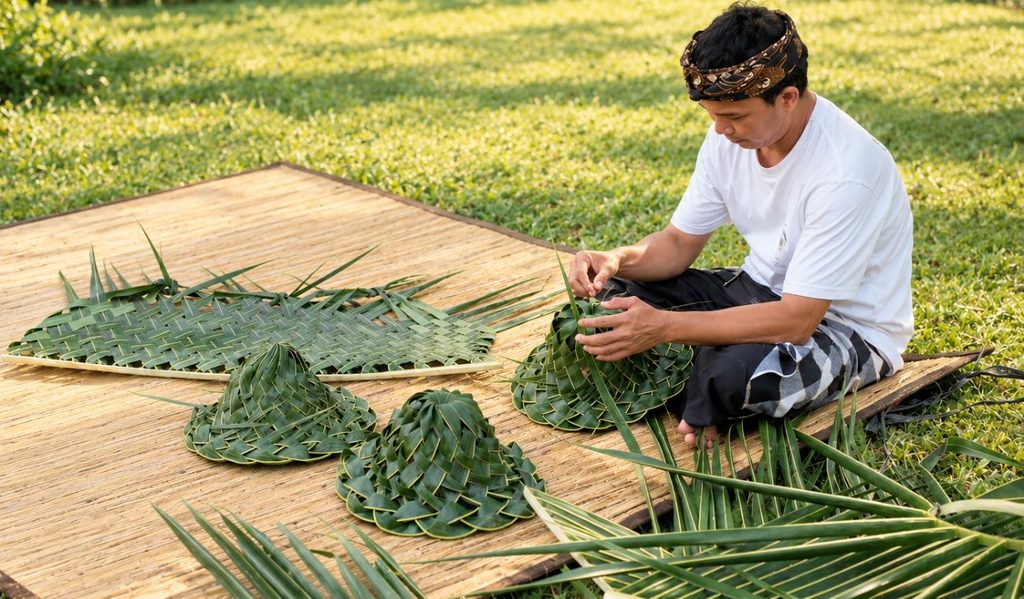
Lesehan Afternoon Tea also introduces guests to traditional Capil Hat making, locally known as Topi Klangsah.
This hands-on activity highlights the creativity and practical skills found in Balinese craftsmanship.
It also connects naturally with Ubud’s agricultural heritage.
What Is a Capil Hat or Topi Klangsah?
A Capil Hat is a traditional hat associated with outdoor work, particularly farming activities.
At Wapa di Ume Ubud, guests discover how artisans create a version using woven coconut leaves.
The craft demonstrates how local communities transform natural materials into practical everyday objects.
For generations, Balinese communities have used coconut leaves for decorative, ceremonial, and practical purposes.
For example, skilled artisans weave them into traditional decorations and useful household items.
During the activity, guests can explore basic weaving techniques and learn how the materials take shape.
The experience also highlights the connection between craftsmanship and Bali’s natural environment.
A Connection to Ubud’s Farming Heritage
Rice fields have shaped the landscape and daily life of Ubud for generations.
Consequently, traditional agricultural tools and crafts offer valuable insight into the region’s heritage.
The Capil Hat reflects this relationship between farming communities and their surroundings.
By learning about coconut-leaf weaving, guests can appreciate the resourcefulness behind traditional craftsmanship.
The activity also reveals how cultural knowledge continues through practical skills.
In this way, a simple craft becomes an opportunity to discover another side of Balinese life.
Afternoon Tea Surrounded by Ubud’s Rice Fields
The setting plays an essential role in Lesehan Afternoon Tea.
Alun-Alun Wapa provides a relaxed outdoor environment surrounded by the rice-field landscape of Wapa di Ume Ubud.
Here, guests can enjoy traditional refreshments while discovering cultural activities that reflect local traditions.
Canang Sari making introduces an important aspect of Balinese Hindu practices.
Meanwhile, coconut-leaf craftsmanship highlights the practical use of natural materials.
Traditional refreshments and Lesehan seating encourage conversation and togetherness.
The surrounding rice fields also provide a connection to the agricultural landscape that has shaped Ubud’s communities.
For travellers who want to explore this relationship further, our guide to Ubud’s rice fields, Subak, and local agricultural culture explains the connection between farming, water management, and community traditions.
Together, these elements create an experience that goes beyond a conventional afternoon tea.
Instead, guests discover several aspects of Bali’s living cultural heritage within one peaceful setting.
When and Where to Experience Lesehan Afternoon Tea
Wapa di Ume Ubud offers Lesehan Afternoon Tea exclusively to resident guests.
Schedule: Every Tuesday, weather permitting.
Location: Alun-Alun Wapa, Wapa di Ume Ubud, Bali.
Participants: Guests staying at Wapa di Ume Ubud.
Activities: Lesehan seating, Balinese coffee or tea, traditional cakes, Rindik music, Canang Sari making, and coconut-leaf hat crafting.
Is Lesehan Afternoon Tea Available Every Tuesday?
Wapa di Ume Ubud schedules this experience every Tuesday, weather permitting.
However, unsuitable weather may affect the outdoor programme. The resort may therefore need to adjust or cancel a session.
Guests should confirm the latest arrangements with the resort team during their stay.
How Is Lesehan Afternoon Tea Different from Regular Afternoon Tea?
Lesehan Afternoon Tea combines traditional refreshments with cultural activities, Balinese music, and floor-level seating.
In contrast, the resort’s regular afternoon tea offers a separate experience.
Guests can explore the Afternoon Tea activity to learn more about the regular offering.
Additionally, Wapa di Ume Ubud introduces traditional craftsmanship through its Balinese Coconut Leaves Creation activity.
These experiences offer different ways to appreciate local traditions during a stay in Ubud.
Why Cultural Experiences Matter During a Stay in Ubud
Ubud attracts travellers with its natural landscapes, artistic traditions, temples, and cultural heritage.
Visitors often explore these attractions through sightseeing tours and organised activities.
However, smaller cultural experiences can offer equally meaningful insights.
For example, guests can learn how to arrange traditional offerings or discover the techniques behind coconut-leaf weaving.
Sharing local refreshments also introduces the social side of Balinese hospitality.
These activities reveal aspects of daily life that visitors might overlook during a busy itinerary.
Discovering Bali Beyond Sightseeing
Cultural experiences encourage travellers to look beyond famous attractions.
Instead of simply observing traditions, guests can learn about the people, materials, and skills behind them.
At Wapa di Ume Ubud, Lesehan Afternoon Tea creates an approachable setting for this discovery.
The activities encourage participation without requiring guests to follow a demanding schedule.
Furthermore, the peaceful rice-field surroundings allow visitors to enjoy the experience at a comfortable pace.
For travellers seeking a deeper connection with Bali, these moments can become lasting memories.
Frequently Asked Questions About Lesehan Afternoon Tea
What is Lesehan Afternoon Tea?
Lesehan Afternoon Tea is a cultural experience at Wapa di Ume Ubud. It combines traditional Balinese refreshments, floor-level seating, Rindik music, Canang Sari making, and coconut-leaf craftsmanship.
Guests enjoy these activities in a peaceful rice-field setting.
When is Lesehan Afternoon Tea available?
Wapa di Ume Ubud offers the experience every Tuesday, weather permitting.
Because weather conditions may affect the programme, guests should confirm availability with the resort team.
Where does Lesehan Afternoon Tea take place?
The experience takes place at Alun-Alun Wapa within Wapa di Ume Ubud.
The outdoor setting overlooks the resort’s surrounding rice-field landscape.
Can visitors who are not staying at Wapa di Ume Ubud join?
No. The resort offers Lesehan Afternoon Tea exclusively to resident guests.
What activities are included?
Guests can enjoy Balinese coffee or tea, traditional cakes, homemade cookies, and Rindik music.
They can also participate in Canang Sari making and traditional Capil Hat or Topi Klangsah crafting.
What is the cultural meaning of Canang Sari?
Canang Sari is a traditional offering that Balinese Hindus use in religious practices.
It expresses devotion and gratitude while reflecting the connection between spirituality and everyday life.
Is Lesehan Afternoon Tea the same as regular afternoon tea?
No. Lesehan Afternoon Tea is a special Tuesday cultural programme featuring traditional activities and Lesehan-style seating.
Wapa di Ume Ubud also offers a separate regular afternoon tea experience.
Experience Balinese Traditions at Wapa di Ume Ubud
Some of Bali’s most memorable experiences come from simple moments.
The gentle sound of bamboo music, the taste of traditional refreshments, and the careful arrangement of flowers can reveal meaningful aspects of local culture.
Likewise, coconut-leaf weaving introduces the creativity and practical knowledge behind traditional Balinese crafts.
At Wapa di Ume Ubud, Lesehan Afternoon Tea brings these elements together in a relaxed cultural experience.
Surrounded by Ubud’s natural beauty, guests can slow down and discover traditions that continue to shape everyday life on the island.
Whether you visit Ubud for its landscapes, wellness, art, or culture, this special afternoon offers another way to connect with the destination.
Discover more experiences at Wapa di Ume Ubud and explore our rooms, suites, and private pool villas to plan your stay.
Lesehan Afternoon Tea takes place every Tuesday, weather permitting, and is exclusively available to resident guests.